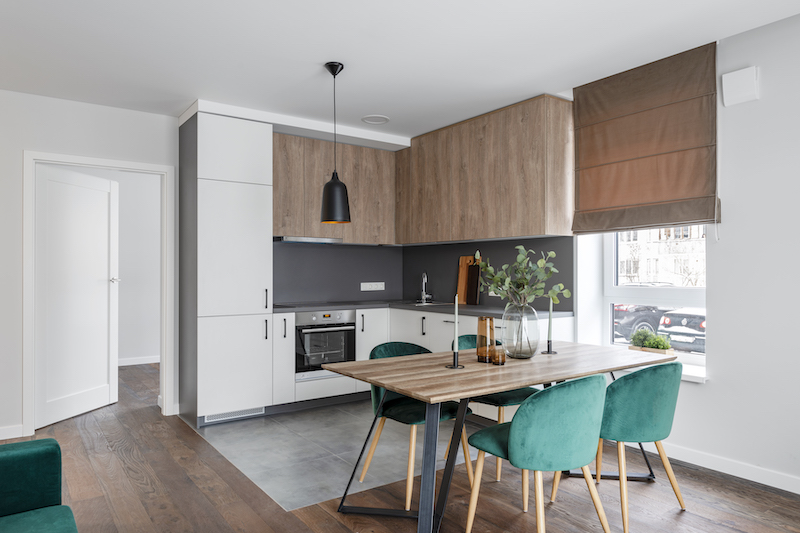
In 2018, EIKA sold 91 fully furnished apartments, compared to 51 such apartments sold in 2017. Their share in the sales portfolio increased from 15 percent (from 332 apartments in 2017) to 26 percent (from 353 apartments in 2018). of all apartments sold. This is a trend that has been observed for the second year in a row, when clients are increasingly abandoning some of the worries of settling in and entrusting them to professionals..
According to Martynas Žibūda, EIKA Development Director, seeing new trends, back in 2017 we made a decision that was not entirely typical for the market – to sell one house in each of two projects only with standardized EIKA finishing. In total, in 2018 we offered 74 such apartments to the market, of which we sold almost half during the same year. “Assessing this growing demand, we will continue to offer apartments with EIKA finishing to the market, and we plan to offer another 47 such apartments in the newly built house in the project “Eika namai Pilaitė” in mid-spring,” M. Žibūda reveals the plans.
Currently, EIKA customers have 4 options: they can purchase apartments with partial finishing, choose an apartment with several standard EIKA finishing variations, as well as order an individual finishing service or purchase fully furnished exhibition apartments, which are sold with all furniture, interior accessories or even cutlery. “We have noticed that fully furnished apartments are most often purchased by young residents using a housing loan, because in this case, savings are needed half as much as when installing the entire finish yourself. In addition, by installing several dozen apartments at a time, we achieve an attractive price for fully furnished apartments, which starts from 250 EUR/sq m, including kitchen furniture and household appliances,” says an EIKA representative.
By purchasing furnished housing, new residents receive not only a more favorable financing scheme, but also the declared quality of work and guarantees, agreed-upon, defined installation deadlines, professional interior designer services, and save their time, which is often translated into monetary terms. “We believe that the established tradition and perception of saving when furnishing housing themselves is gradually changing in Lithuania, weighing all criteria – not just the specific amount of money that can be saved,” says M. Žibūda.