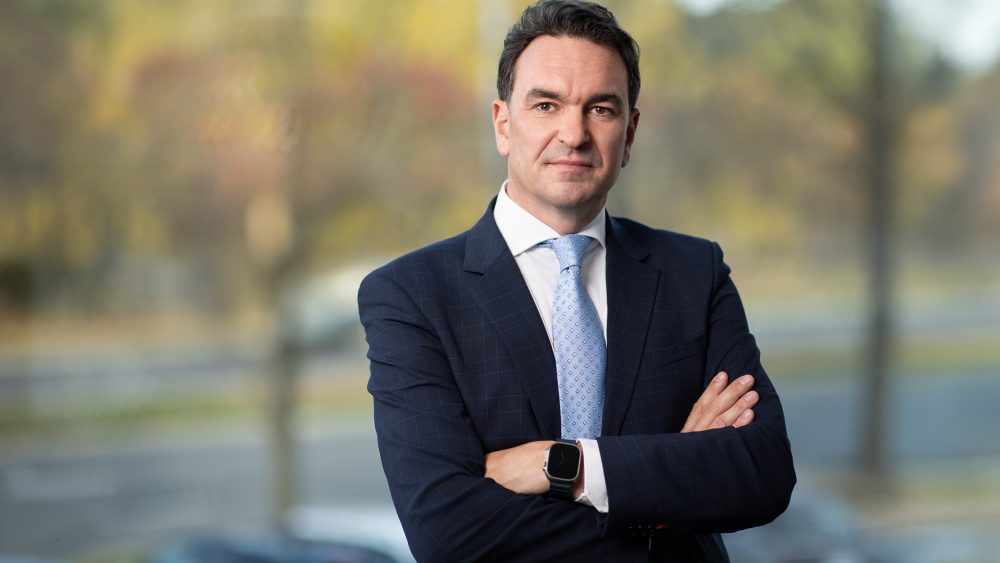
The World Day for Safety and Health at Work, celebrated on April 28, reminds us of a topic that is particularly relevant to one of the country’s largest sectors – construction. In recent years, the number of deaths on Lithuanian construction sites has been steadily decreasing, but “even one person killed at work is one too many,” claims the head of one of the market leaders, EIKA Construction.
The situation is improving, but it is not enough
Last year, a total of 503 accidents were registered in the country’s construction sector, of which 468 were considered minor, 30 serious, and 5 fatalities were recorded. Although the numbers are significant, the situation has improved beyond recognition over the past two decades: in the period 2004–2006, about 80–120 serious accidents were recorded annually and between 15 and 25 fatalities per year, making the construction market one of the most dangerous in the country.
“Today we celebrate Occupational Safety and Health Day, but I would like this day to be every day, because no job should cost a life. Over the past 20 years, the number of serious accidents has decreased by 2-3 times, and today we have about 3-5 times fewer fatal cases. This is encouraging, but we cannot stop – we all in the market must try even harder, because even one person killed at work is one too many,” says Almantas Čebanauskas, head of EIKA Construction.
The head of the company, which has almost 200 employees, is convinced that positive changes can be achieved through constant attention to safety and health, and adds that proactive efforts are indeed bearing fruit – in 2023-2025, EIKA Construction did not record a single accident.
“Human safety and health must be the top priority. Every year, we devote more and more attention, resources and hours to prevention and ensuring occupational safety at construction sites, which are carried out at least once a year. We also use the digital system “Dalux”, which allows us to identify risks more effectively, promptly manage incidents, strengthen internal communication and take preventive actions,” A. Čebanauskas lists the safety measures.
Attitudes towards occupational safety are changing
The World Day for Safety and Health at Work, which has been celebrated since 2001, encourages the creation of safe, healthy and appropriate working conditions, and the State Labour Inspectorate (SLI) with the campaign “Vision 0” invites employers and employees to fundamentally review their approach to safety. According to A. Čebanauskas, the situation in the market is improving not only among employers, but also among employees.
“10-15 years ago, occupational safety was often overlooked, as if it were a formality. There were too few protective measures and weak control. It is gratifying that today companies understand its importance and it is yielding results. At the same time, the attitude of employees is changing – they behave much more consciously and responsibly. Seeing this, I believe that in the future we will have an even safer work culture in Lithuania,” shares a representative of the construction market.
The head of EIKA Construction adds that in order to ensure the highest possible standards of occupational safety, one cannot limit oneself to one’s own employees – this also requires strict supervision of all people and processes operating on the construction site.
“In construction, it is important to think about everything and everyone, so we require subcontractors and suppliers to work according to a strict procedure – to use the Dalux platform, fill out acts, register risks, violations and other information. We carefully monitor the activities of all contractors and promptly resolve any issues that arise. Perhaps our strictness may seem excessive to someone, but this is the only way we will ensure everyone’s safety and health,” concludes A. Čebanauskas.