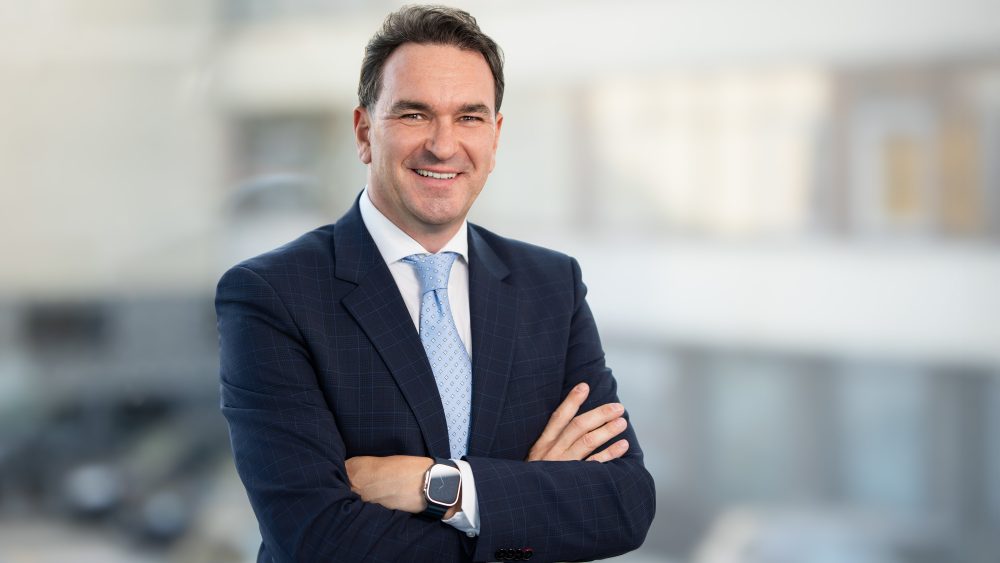
As every year, on the second Saturday of September this year, Lithuania celebrated the professional holiday of construction workers – this tradition has been observed for 25 years. Almantas Čebanauskas, the head of the company “EIKA Construction” (formerly “EIKOS statyba”), remembering what work in the construction sector looked like so long ago, says that the differences are enormous in all areas, starting with the technologies used and ending with the work culture. And looking to the future, he considers, the biggest challenges will be an even greater increase in productivity and a corresponding increase in salaries, which is still lacking now. Also, more and more construction work will be performed outside of construction sites.
On the occasion of the past Builders’ Day, we talk to A. Čebanauskas about how the construction sector has changed compared to the period 25 years ago.
– When talking about the first decade of Lithuania’s independence, society often follows a narrative version that at that time everyone in business was self-taught, learning by doing, from their own mistakes, and only later did Western practices and an understanding of how business is conducted form. Can this also be said about the construction sector?
– I myself have been working in this sector for 26 years. Of course, everything depends a lot on the specific area, but when it comes to construction itself, it wasn’t like building just anything – still, even in the Soviet Union system, considerable foundations were laid, there were strong construction universities, and the engineering staff was of a high level. However, the technologies and project management itself, the understanding of how to do it, were very different. After all, everyone was used to a planned economy, when financing was simply received and there was no competition – well, if we are talking about the very beginning of independence, because during its first decade, everyone already clearly felt that competition.
A very bright new stage began when Lithuania joined the European Union, in 2004. I had to work for four years before that – the orders were smaller, the construction was poor, and in general, it was only the very beginning of residential construction.
And in 2004, there was a huge leap forward, because European funding came, new technologies came to various areas, both in the construction of high-rise buildings and residential buildings – new materials, we began to manage the environment differently, develop modern wastewater treatment and disposal facilities, began to develop different landfills, a serious approach to environmental requirements emerged, the way smaller towns are managed changed, in fact, huge changes have occurred during that time.
– No one talked about ecological or sustainability requirements 25 years ago?
– No, I had to learn a lot of new things. I myself have been working in Vilnius for eight years now, we build not only ordinary buildings, but also airports, university faculties, other objects, but before that I worked in a company that works with wastewater treatment plants. For example, when working in Mažeikiai, we had to build all the wastewater treatment plants from scratch, so that we could ensure the purification indicators – we cooperated with partners from Denmark, applied the latest technologies and there was a qualitative leap.
– Without going into very specific professional terms, could you explain what new technologies have arrived, what we do differently now?
– Probably the most obvious thing is that the Internet came, work on computers took hold, later, in addition to that electronic space, all 3D things came, design and implementation in the BEAM environment, new technologies for both finishing details and the solutions themselves. Labor productivity has also increased significantly, although not as much as we would like, and compared to wages, it still does not increase to such an extent. But the principles of design, construction, and many technologies have changed over the past twenty years.
– Speaking from a visual perspective, 25 years ago, many people associated glass buildings with the West, which we didn’t have ourselves at the time – then they started to sprout rapidly. Has this fashion for glass buildings come about?
– Speaking of glass buildings, there are now considerations that are fashionable or not fashionable, but those glass buildings are becoming less sustainable. All over the world, including in Lithuania, the weather is getting warmer and one can consider whether glass is truly sustainable or whether we will go back and reduce the amount of glass.
– Perhaps the goals set for the longevity of buildings have also changed? You yourself mentioned the “pencil” built by one of your competitors, which is now being demolished. Maybe there is no need to build for a long time anymore – it will be enough for the building to serve for several decades, we will demolish it and build another one?
– I would say that it depends on the purpose of the building. For example, shopping centers, although built only 15-20 years ago, rebuild a lot of stores, often quite large ones. The same “Panorama”, I think, was renovated maybe 10-12 years ago, very beautifully, but now it is being renovated again. But residential buildings are not rebuilt so quickly – they still have to have a longer life cycle.
– You mentioned that project management used to be different – how has it changed?
– I myself was a foreman who walks around with three or four people and does work, I haven’t been directly involved in project management yet, but what I have clearly seen is that the speed has changed a lot. For example, 25 years ago, the equipment was Russian, which often breaks down and breaks down – it was supposedly normal for 20-25 percent of it to be out of order. There were no computers, everything was done practically manually, both drawing up drawings and keeping accounting records – so everything went slowly.
Now design takes place in electronic space, for example, we have not had most of the data and programs on computers for eight years – everything is in the “cloud” and if you come to our office, there is not even any data that you could steal. We work with many different programs that analyze, help manage the project both in terms of time and its budget, defect recording systems are in place – everything is automated and a lot of tools are used for this.
– And speaking of work culture, how has it changed? Let’s not hide it, in the past, the image of construction workers was poor, parents used to scare their children that if they didn’t study, they would have to go to construction sites to carry bricks..
– You know, it happens that doctors, politicians, and police officers do all sorts of crazy things – you can’t say that everything has been eradicated 100 percent, but for the most part the culture has changed a lot, especially in the large companies that we work with. I’m not talking about those builders who build private houses and cottages – there are certainly people and companies there who do a great job, but there are also those who don’t follow safety at work, sometimes they still don’t realize that you can’t work while intoxicated.
But in large companies we have employees responsible for safety at work who drive around, make sure that employees work safely – for four or five years now we have been implementing access controls in all facilities, where every employee checks their sobriety when entering and leaving, and registers. Yes, in terms of culture, up until 2005-2007, drunkenness was a huge problem – from those old times, apparently, it had come down to the fact that it was possible to do that at work, but now it has definitely changed for the better. There is technology for this, and much higher-level safety measures, and in general, the understanding that people need to be protected is now greater.
– So that we don’t just talk about the past – where do you think we will move in the future, in what direction will the biggest changes take place?
– We will probably talk mostly about technological changes now. The advent of artificial intelligence can make processes somewhat easier. However, currently, many mechanical actions are still performed during design, such as ordering, selecting, and calculating materials, which require many man-hours and skilled labor – I think that in the future, artificial intelligence will be able to take over some of that work or at least help humans.
And when it comes to assessing the biggest challenges and what companies will work on the most, it will be increasing productivity. Currently, productivity is not very high in our country yet, it does not correspond to the increase in wages.
The third thing is that construction is partly moving to factories, where some semi-finished products are produced, and they want to build on the site as quickly as possible, especially since the weather conditions in Lithuania, especially as the winters get warmer, mean that some work cannot be done with high quality or needs to be paused. I think that this part will increase in the future – the production and measurement of semi-finished products, called prefabs, in order to shorten the time spent on the construction site.
– Thank you for the conversation!