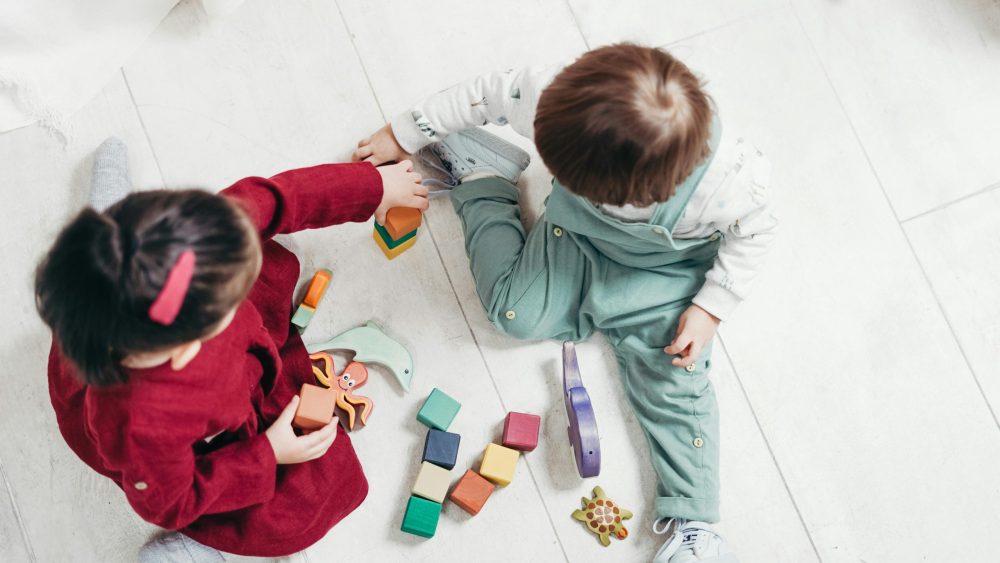
Preschool children do not yet have sufficient skills to manage their feelings, to wait, to understand how others feel, so various conflicts can arise both in kindergarten or the yard, and between siblings. It is very important that adults help children to resolve them properly..
When should you intervene in a children’s conflict?
Psychologist Ieva Dulinskaitė, head of the social-emotional skills program “Second Step” at the Child Support Center, says that adults should be there, carefully monitor children’s behavior and show them how to act in case of a conflict. “Children learn how to resolve conflicts properly from adults, so it is very important how parents and teachers react when siblings, friends from the yard or kindergarten get into an argument. Preschoolers need to learn not only to be friends, to come to an agreement, but also to learn appropriate ways to show their feelings, to postpone impulsive actions and other social-emotional skills,” emphasizes the psychologist, who trains teachers to work with the “Second Step” program for kindergartens, which is funded by the “Eika” group..
According to I.Dulinskaitė, as soon as a conflict arises between children, adults should take their time and first observe whether they manage to resolve the situation on their own. When the problem is not big, children often find creative solutions on their own. However, if the conflict escalates, before the children have the necessary skills, they should intervene and teach them how to express their wishes and feelings, take the other person’s situation into account, and find a solution that suits both.
It is important to teach people to understand their feelings and find solutions.
When it comes to helping resolve a conflict, it is very important for adults to act and speak calmly. The self-control, calm disposition and reaction of parents or teachers teach children the same. It is also very important not to jump to conclusions, not to start blaming or moralizing. “Initially, it is best to name what you heard or saw and then let them speak one by one. For example: “I hear screams, what happened?”, – advises the psychologist of the Children’s Support Center. – After both sides of the conflict have told the situation from their perspective, it is important to show that everyone has been heard. For example: “Your sister trampled the castle you were building and that made you very angry”, “Your angry brother pushed you, that made you very sad”.
After the conflict has subsided, older children should be taught to understand each other’s feelings and look for possible solutions. You can ask: “How do you think your brother felt when you stepped on his castle?”, “How do you think your sister felt when you pushed her?” This helps each child feel heard, understand that both actions led to the current situation, and hearing the other side strengthens the feeling of empathy.
Then it would be a good idea to ask the children what they could have done differently to prevent the conflict from happening. Then ask them to list solutions that will help them reach an agreement in the future. And suggest trying the one that seems safest and will help everyone feel good.
What not to do for adults?
In order for children to learn how to resolve conflicts properly, to recognize and name feelings, it is very important not to impose our decision on adults in a conflict situation and not to take the side of one of the children. “By imposing our decision on children, we are not teaching children anything, they lose the opportunity to try to express their feelings, needs, and understand the other person’s position. And the presence of parents or teachers on one side can have a negative impact on children’s relationships and attitudes towards each other, strengthen competition, the desire to take revenge, and teach a lesson to a brother, sister, or kindergarten friend,” notes I. Dulinskaitė.
And he adds that children should not be forced to apologize to each other immediately after a conflict. They often need time to calm down and reflect on the situation. An apology will be more genuine and sincere if it is not expressed mechanically by adults, but is said thoughtfully and when the child himself feels ready to apologize..
This year, children are being taught to resolve conflicts, manage their feelings, build friendships and other social-emotional skills in 23 kindergartens in various Lithuanian cities and towns, as part of the project “Second Step for Kindergartens” implemented by the Child Support Center together with the “Eika” group. It is planned to conduct 4,060 social-emotional skills lessons for 558 children.