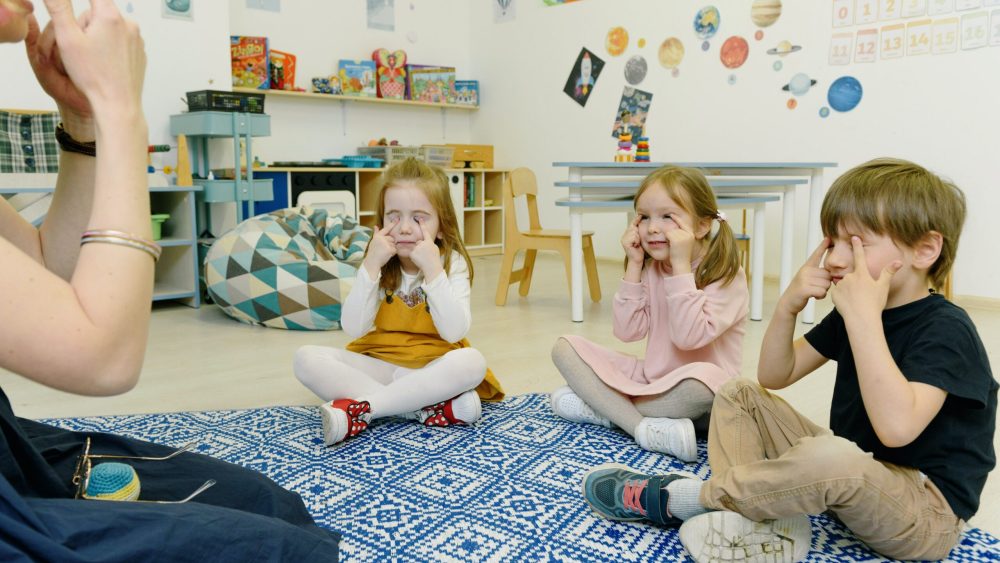
By joining forces with the Eika group and the non-governmental organization Paramos vaikams centras, the social-emotional skills program “Second Step for Kindergartens” is launching in Lithuania. Almost 40 preschool educators will be trained to teach children to understand and manage their feelings, resolve conflicts, cooperate, and other social-emotional skills..
“Second Step for Kindergartens” – an effective tool for educators
“It is very important to start strengthening not only children’s academic, but also their social and emotional skills as early as possible, because this is the foundation that helps kindergarteners feel good, later in school, and even in adulthood. Children have already learned such essential skills in kindergarten as listening and concentrating, feeling empathy, managing emotions, building friendships, and solving relationship problems, and they get used to applying them all the time,” emphasizes Aušra Kurienė, head of the Child Support Center, psychologist and psychotherapist.
In order for kindergarteners to acquire social-emotional skills, educators need an effective tool. The “Second Step for Kindergartens” program – daily interactive lessons, during which children aged 4-6 perform age-appropriate, engaging and easy-to-understand tasks, helps achieve visible results.
“After implementing the pilot program, kindergarten teachers in Vilnius, Kėdainiai, and Alytus noticed that after just a few months, children’s aggressive behavior significantly decreased, they became much friendlier, more often tried to help each other and their teachers, calmed down faster when angry, shared toys more easily and included each other in games, and stayed focused longer,” says psychologist Ieva Dulinskaitė, head of the “Second Step for Kindergartens” program at the Children’s Support Center.
Business invests in the emotional health of Lithuanian kindergarteners
The impact of the program is long-term – children with social-emotional skills are able to build friendly relationships at school, are less likely to be bullied, are more involved in extracurricular activities, respond appropriately to stressful situations, and use alcohol and other psychoactive substances less often. All of this also affects students’ higher academic achievements.
The changes in the behavior and well-being of children participating in the “Second Step for Kindergartens” program, which are also confirmed by scientific research, prompted the “Eika” group to invest in the emotional health of Lithuanian children.
“When we organized the hackathon “Smartuoliai” dedicated to the emotional health of children in the fall of 2022, we realized that developing children’s emotional skills would become our long-term strategic direction of support. Therefore, the partnership and partnership with the Child Support Center and the “Second Step” program allow us to consolidate this strategic direction. The essence of the program – developing children’s emotional skills from an early age – must become one of the most important foundations of children’s education, which forms the future emotionally strong and resilient generation. We believe that with a long-term and systematic approach, we will achieve a breakthrough in this area,” says Domas Dargis, CEO of Eika.
With the Eika Group funding the implementation of the Second Step for Kindergartens program, psychologists from the Child Support Center will train almost 40 educators who are planned to teach social-emotional skills to 600 children attending kindergartens in various Lithuanian municipalities.